LGBT+ Inclusion in the Workplace: Challenges, Legal Requirements, and Best Practices
Why LGBT+ Inclusion Is a Strategic Priority for Businesses
In France, one in four LGBT+ people report having experienced discrimination at work. According to the 2024 Ifop/Autre Cercle LGBT+ Barometer, 53% of LGBT+ people have heard LGBT-phobic remarks in the workplace. Nearly 55% do not come out to their colleagues for fear of repercussions on their careers or professional relationships.
The gap in perception is striking: 93% of non-LGBT+ individuals believe their company is LGBT-friendly, compared to just 77% of LGBT+ individuals themselves (Ifop/Autre Cercle Barometer, 2024). This disparity reveals a major blind spot in the inclusion policies of many organizations.
Beyond the human aspect, invisibility and discrimination based on sexual orientation or gender identity have direct consequences on performance: disengagement, absenteeism, self-censorship, and turnover. Companies that are committed to LGBT+ inclusion, on the other hand, see an increase in trust, team cohesion, and employer attractiveness.
LGBT+ inclusion is not a peripheral aspect of diversity; it is a sign of an organization’s cultural maturity. A company that knows how to embrace all identities is a company where everyone can give their best.
Key Figures: The State of LGBT+ Issues in the Workplace in France
The data from the Ifop/Autre Cercle LGBT+ Barometer, the national benchmark on this topic, paint a clear picture:
- 53% of LGBT+ people have heard LGBT-phobic remarks at work
- 28% have been victims of at least one LGBT-phobic attack within their organization
- 55% of LGBT+ people do not come out at work
- One in four LGBT+ people has experienced discrimination in the workplace
- A 16-point gap between the perceived inclusion of LGBT+ individuals (77%) and non-LGBT+ individuals (93%)
- 7 out of 10 LGBT+ people have heard negative comments about LGBT+ people in their workplace
These figures show that despite legislative progress, anti-LGBT discrimination remains a daily reality in the workplace. The issue is not merely legal; it is cultural and managerial.
Where does your company stand on LGBT+ inclusion?
Our diversity and inclusion assessment identifies your strengths and areas for improvement regarding LGBT+ inclusion.
L’Autre Cercle’s LGBT+ Commitment Charter: A Guiding Framework
The LGBT+ Commitment Charter, spearheaded by the association L’Autre Cercle, is the leading framework in France for establishing an LGBT+ inclusion initiative within companies. To date, more than 350 signatory organizations representing over 2.2 million employees have made this commitment.
The Charter is based on four pillars:
- Creating an inclusive environment for LGBT+ employees
- Ensure equal rights and treatment for all employees
- Supporting victims of discriminatory remarks or actions
- Measuring progress and sharing best practices
Signing the Charter is not merely a symbolic gesture: it is an operational commitment that requires concrete actions, regular monitoring, and transparent communication. Accordia supports companies that wish to embark on this process or strengthen their efforts following the signing.
Legal Framework: Employers’ Obligations Regarding LGBT+ Inclusion
French law explicitly protects employees against discrimination based on sexual orientation and gender identity:
- Article L.1132-1 of the Labor Code: prohibits any discrimination in hiring, career advancement, and working conditions
- Article 225-1 of the Penal Code: Discrimination based on sexual orientation or gender identity is punishable by up to three years in prison and a fine of 45,000 euros.
- Law of May 27, 2008: Transposes European directives and defines the forms of direct and indirect discrimination
- Employer’s duty to ensure safety (Art. L.4121-1 of the Labor Code): The employer must prevent psychosocial risks, including those related to LGBTphobia
An employer who fails to address LGBT-phobic remarks or behavior may be held liable. In addition to disciplinary action, the matter may be referred to the Human Rights Defender, and criminal proceedings may be initiated.
Manifestations of LGBTphobia in the workplace
LGBTphobia in the workplace takes many forms, which are often downplayed. The Ifop/Autre Cercle Barometer identifies the most common manifestations:
- Teasing and jokes: “That’s a gay thing,” jokes about gender stereotypes
- Forced outing: revealing a colleague’s sexual orientation or gender identity without their consent
- Marginalization: exclusion from informal interactions, strategic projects, and promotions
- Transphobia: refusing to use the first name or pronouns chosen by a transgender person
- Implicit heteronormativity: assuming heterosexuality in all conversations, forms, and corporate events
Even when they seem harmless, these behaviors create a climate of psychological insecurity that leads to invisibility and self-censorship.
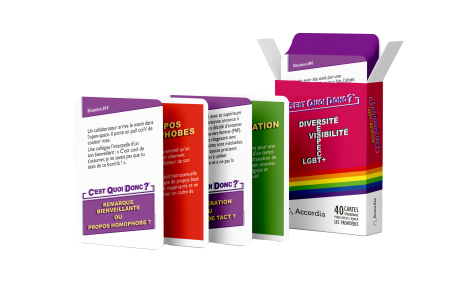
Raise awareness among your teams with the game "What Is It?" LGBT+
A fun and interactive format designed to spark a conversation about LGBT+ issues without making anyone feel guilty. Perfect for team meetings or workshops.
Developing an LGBT+ Inclusion Policy: Key Areas for Action
1. Assessment of the current situation
Before taking action, assess the situation: where does your organization stand on LGBT+ inclusion? A workplace climate survey, a diversity and inclusion assessment, or an HR practices audit can help objectively evaluate the situation and identify priorities. L’Autre Cercle also offers an assessment framework through its Barometer, which companies can use internally.
2. Visible commitment from management
LGBT+ inclusion cannot move forward without clear leadership at the highest levels. The signing of L’Autre Cercle’s LGBT+ Commitment Charter sends a strong signal. Leadership speaking out, appointing liaisons, and allocating dedicated resources are credible indicators of commitment.
3. Raising awareness among all teams
The first step is raising awareness among all teams about LGBT+ issues: breaking down stereotypes, understanding the challenges of invisibility, and familiarizing themselves with the legal framework. Accordia offers tailored programs, including LGBT+ awareness games, interactive workshops, and training sessions for managers.
4. Specific training for managers and HR
Managers are the primary advocates for inclusion in the workplace. They must know how to respond to LGBT-phobic remarks, support employees who are coming out or transitioning, and ensure a respectful work environment. Accordia’s diversity and inclusion training programs incorporate these skills.
5. Inclusive HR policies
Adapting HR policies: equal parental leave, recognition of same-sex parent families, support for gender transitions, and inclusive language in internal communications. Every small step counts toward creating an environment where everyone feels valued.
6. Join a network of socially responsible companies
Leveraging the existing ecosystem speeds up the process. L’Autre Cercle, a leading national association, offers resources, events, and a network of more than 350 organizations that have signed the Charter. Participating in this ecosystem allows you to benefit from the insights of companies that have already established their LGBT+ inclusion policies.
Train your managers on LGBT+ inclusion
Addressing LGBTphobia, supporting someone through their coming out, and fostering an inclusive workplace. Our training programs combine rigor with effective teaching methods.
Accordia’s Support for LGBT+ Inclusion in the Workplace
For the past 16 years, Accordia has been supporting companies in their diversity and inclusion initiatives. When it comes to LGBT+ issues, our approach combines rigor, education, and pragmatism:
- LGBT+ Inclusion Readiness Assessment : analysis of practices, workplace climate survey, industry benchmarking
- "What Is It?" LGBT+ Awareness Game : a fun and interactive format to open up dialogue without making anyone feel guilty
- Training for Managers and HR : Responding to LGBTphobia, supporting transitions, creating an inclusive management culture
- Strategic Consulting : developing your LGBT+ inclusion policy, preparing to sign the L’Autre Cercle Charter, post-assessment action plan
Our belief: LGBT+ inclusion cannot be mandated; it is built through concrete, measured actions implemented at all levels of the organization. Contact us to discuss your challenges.
Are you looking to develop a structured approach to LGBT+ inclusion?
Accordia is here to support you: assessment, awareness-raising, training, and strategic consulting. With 16 years of expertise, we have supported over 500 companies.
Learn more
Reference Resources
- L’Autre Cercle – The leading national organization for LGBT+ inclusion in the workplace
- Ifop/Autre Cercle LGBT+ Barometer – A benchmark study on the situation of LGBT+ people in the workplace
- LGBT+ Commitment Charter – The Commitment Framework for Organizations
Accordia Featured Pages
- Raising Awareness of Sexism in the Workplace: Understanding, Taking Action, and Bringing About Change
- Preventing Sexism in the Workplace: Legal Framework and Concrete Actions
- Gender Equality in the Workplace: Requirements, Index, and Action Plan
- Disability in the Workplace: Requirements, Awareness, and Inclusion
- Intergenerational Management: Turning Age Diversity into Performance
- Corporate Diversity and Inclusion Assessment
Related articles
- Diversity and Inclusion Training: How to Choose the Right Provider
- Everyday Sexism in the Workplace: Real-Life Examples and How to Respond
Frequently Asked Questions About LGBT+ Inclusion in the Workplace
Does an employer have a legal obligation regarding LGBT+ inclusion?
Yes. The Labor Code (Art. L.1132-1) prohibits any discrimination based on sexual orientation or gender identity. Employers have a duty to ensure a safe work environment, which includes preventing discrimination and LGBT-phobic harassment. Failure to take action against discriminatory behavior makes the company liable.
What is L’Autre Cercle’s LGBT+ Commitment Charter?
The LGBT+ Commitment Charter is an initiative led by L’Autre Cercle and signed by more than 350 organizations in France. It commits signatories to four key areas: creating an inclusive environment, ensuring equal rights, supporting victims, and measuring progress. It serves as the framework for developing a credible and measurable LGBT+ inclusion strategy.
How can we discuss LGBT+ issues without making people feel uncomfortable?
Prioritize participatory and supportive approaches over moralizing ones. Awareness-raising games, personal stories, and role-playing exercises help open up dialogue without making people feel guilty. The goal is to foster understanding, not to lecture.
What should you do if an employee comes out?
Be welcoming and respectful of confidentiality: never disclose information without the person’s consent. Managers must ensure that the work environment remains respectful and be attentive to the team’s reactions.
How can we support a gender transition within the team?
Prepare the team in advance with the person’s consent, update administrative documents (first name, title), train managers on best practices, and ensure that the person’s chosen first name and pronouns are respected.
What metrics should be used to measure LGBT+ inclusion?
Results of internal climate surveys, participation rates in awareness-raising initiatives, number of reports processed, visibility of role models and allies, and engagement in networks such as L’Autre Cercle. Regular monitoring of these indicators allows us to measure progress and adjust our strategy.
Our related offers
Diversity Awareness | D&I Conference | Diversity Training | D&I Policy