Documentary database

The Diversithèque©

Documentary database

Accordia continuously monitors best practices in terms of inclusion.
We offer you a rigorous selection of external resources on diversity and inclusion.

This enriching collection is designed to enlighten and inspire all those seeking to deepen their knowledge of inclusion issues.

Filter

Filter by

Which period?

Reflections on the concept of diversity - AFMD
 

🌟 Understanding the Concept of Diversity: Perspectives and Applications

The document Réflexions autour du concept de diversité : éclairer pour mieux agir, published by the AFMD, explores the origins, issues and implications of the concept of diversity in the corporate context. This guide offers an in-depth reflection on how diversity can be defined, implemented and managed to combine organizational performance and social inclusion.

📋 Origins and definition of the concept of diversity

The term diversity has its roots in the Latin diversitas, meaning the varied nature of a whole. Applied to companies, it reflects a broad vision integrating visible (gender, age, origin) and non-visible (sexual orientation, beliefs, life history) characteristics.

Historically, the concept has been structured around two major influences:

  1. Affirmative action policies in the United States: Focused on compensating for historical inequalities through preferential measures.
  2. The economic promotion of diversity: Valuing differences to meet the needs of a globalized market.

In Europe, and particularly in France, diversity is often associated with the fight against discrimination, while aiming for equal opportunities and greater inclusion of minorities.

⚖️ Diversity and corporate management

Diversity is a strategic lever for companies. However, putting it into practice requires a response to a number of challenges:

  • Managerial consistency: Integrating diversity into HR processes (recruitment, training, development).
  • Legal adaptation: Respect national and European legal frameworks.
  • Valuing differences: transforming individual diversity into collective assets.

One of the major challenges is to articulate diversity and equality, without opposing the two notions, but using them in a complementary way to strengthen performance and cohesion.

🌍 Impact and role of diversity managers

Diversity managers play a key role in developing and implementing inclusive policies:

  • Raising awareness and training teams.
  • Setting up diagnostics to measure discrepancies.
  • Develop indicators to monitor and evaluate progress.

In this context, collaborations with external partners (associations, public agencies) are often necessary to guarantee the relevance and effectiveness of our approaches.

🛠️ Practical recommendations

To maximize the impact of diversity policies :

  1. Clearly define objectives: Avoid conceptual blurring by specifying priorities (equal opportunities, anti-discrimination).
  2. Involve all stakeholders: HR managers, trade unions, managers and employees must all be involved in the process.
  3. Establish measurable action plans: Include indicators and regular reviews to ensure continuous improvement.
  4. Promote social dialogue: Negotiate diversity policies to reinforce their acceptability and legitimacy.

AFMD | Reflections on the concept of diversity: shedding light for better action
Go to data sheet

Companies and religious diversity: management through dialogue - AFMD


🌟 Religious Diversity at Work: Issues and Best Practices

Diversité religieuse au travail : Un management par le dialogue explores the challenges of managing religious diversity in French companies. Through a pragmatic and humanistic approach, it proposes tools and strategies for transforming cultural and religious diversity into assets, while maintaining team cohesion and organizational performance.

📋 Managing religious issues: a managerial challenge

Religious issues in the workplace raise complex and sometimes sensitive questions. Whether it's a question of requests for accommodation (schedules, prayers, dress) or tensions between colleagues, the manager's role is crucial in ensuring an inclusive and productive environment.

Key challenges include :

  • Conflicts between individual freedom and collective needs: How can respect for personal beliefs be reconciled with organizational imperatives?
  • Cohesion problems: Certain practices or attitudes perceived as proselytizing can give rise to tensions.
  • Lack of understanding of the legal framework: The balance between religious freedom and corporate neutrality is often misunderstood.

⚖️ Legal framework and guiding principles

French law is based on the principles of secularism, non-discrimination and neutrality. Some key points:

  • Religious freedom: Employees are free to express their religious convictions, subject to respect for public order and professional imperatives.
  • Company neutrality: Unlike public-sector employees, private-sector employees are not subject to a strict obligation of neutrality, unless specifically mentioned in internal regulations.
  • Reasonable adjustments: Companies may consider adjustments such as prayer breaks or flexible working hours, provided they are compatible with the organization of work.

🛠️ Practical recommendations

  1. Encouraging dialogue
    Dialogue is central to defusing tensions and understanding real needs. A manager trained in intercultural management will be better prepared to deal with religious demands.
  2. Establish clear rules
    Include specific clauses in internal regulations to regulate religious practices while preserving equality and cohesion.
  3. Training teams
    Raising employees' awareness of religious diversity issues can reduce stereotypes and encourage a climate of mutual respect.
  4. Rely on practical tools
    Practical guides and fact sheets, such as those offered by La Poste and Orange, can help managers make the right decisions in complex situations.

AFMD | Companies and religious diversity: management through dialogue

Go to data sheet

Diversity in Purchasing: A Source of Sustainable Performance - AFMD


🌟 Diversity in Purchasing: A Source of Sustainable Performance

La diversité dans les achats : Une source de performance durable (Diversity in purchasing: a source of sustainable performance ), published by the AFMD, offers a strategic approach to integrating diversity issues into responsible purchasing policies. This guide highlights the opportunities, challenges and best practices for transforming purchasing into a lever for social inclusion and economic efficiency.

📋 Why include diversity in purchasing policies?

Integrating diversity into purchasing is not limited to ethical considerations. It is a strategic response to a number of challenges:

  • Strengthen competitiveness: diverse suppliers bring agility and innovation.
  • Meeting regulatory requirements: Legislation is increasingly imposing social criteria on public procurement contracts.
  • Enhance the company's image: An inclusive policy improves the employer brand and attracts talent.

⚖️ Priority areas of work

  1. Supporting diversified suppliers
    • Working with small and medium-sized businesses, sheltered workshops and integration companies.
    • Encourage suppliers from disadvantaged areas or run by minorities.
  2. Recognizing suppliers' commitment
    • Include diversity criteria in calls for tender.
    • Promote inclusive policies implemented by suppliers.
  3. Securing the supply chain
    • Prevent social and environmental risks at every stage of subcontracting.

🛠️ Best practices for an effective policy

  1. Mapping purchasing families: Identifying categories with significant social issues.
  2. Train buyers: raise awareness of the benefits of diversified management.
  3. Create tools: Develop directories of various suppliers and distribute practical guides.
  4. Establish strategic partnerships: Work with expert organizations such as the GESAT or Adive networks.
  5. Include social clauses: in contracts and calls for tender.

AFMD | Diversity in purchasing: a source of sustainable performance

Go to data sheet

Evaluating for action: statistical diagnostics for equality policies - AFMD


🌟 The Importance of Statistical Diagnostics in Equality and Inclusion Policies

The fight against discrimination in the workplace requires innovative and appropriate tools to assess internal practices. The book "Évaluer pour agir : Les diagnostics statistiques au service des politiques d'égalité", published by AFMD in partnership with ISM CORUM, offers a comprehensive overview of the methods available to analyze HR practices and prevent discriminatory risks.

📊 Why integrate statistical diagnostics?

Statistical diagnostics, such as testing, application analysis or career studies, play a key role in implementing diversity and inclusion policies. They enable us to :

  • Identify discriminatory biases: for example, differences linked to origin, gender or age.
  • Evaluate the impact of actions implemented: measure the effectiveness of awareness campaigns or training courses.
  • Guide action plans: provide concrete data to prioritize measures.

🛠️ Available assessment tools

1️⃣ Testing

Testing consists of sending out fictitious applications, identical on all but one criterion (e.g.: origin or gender), to assess the recruiters' response. It's a powerful tool for measuring non-discrimination in recruitment.

2️⃣ HR file analysis

Statistical analyses of job applications and career paths enable us to identify discrepancies in selection practices and career development.

3️⃣ Perception surveys

These surveys gather employee feedback on D&I initiatives, adding a qualitative perspective to the numerical diagnoses.

💡 Key results of shared diagnostics (2022-2023)

  • 16 diagnostics carried out: involving testing and analysis of HR files.
  • 63% of the cases studied showed significant discrepancies linked to origin or gender, particularly in the recruitment stages.
  • Measurable progress: companies that have renewed their diagnostics have noted improvements in their HR practices.

🔑 Recommendations for an effective approach

  1. Management commitment: Strong leadership is essential.
  2. Ongoing training: Raising awareness of discriminatory risks among HR teams and managers.
  3. Regular diagnosis: Renew studies to monitor progress and adjust actions.
  4. Internal and external communication: sharing results to strengthen the employer brand and raise awareness among all stakeholders.

AFMD | Évaluer pour agir : les diagnostics statistiques au service des politiques d'égalité

Go to data sheet

How to assess the impact of diversity and inclusion policies? AFMD


🌟 Assessing the Impact of Diversity and Inclusion Policies: Methods and Issues

Comment évaluer l'impact des politiques de diversité et d'inclusion? published by the Association Française des Managers de la Diversité (AFMD) offers a rigorous method for measuring the effectiveness of diversity and inclusion (D&I) initiatives. This guide highlights the challenges, opportunities and innovative approaches to assessing the impact of D&I policies within organizations.

📋 Why evaluate the impact of D&I policies?

With the evolution of legislative and social frameworks, it has become essential for companies to demonstrate the concrete results of their D&I initiatives. Impact assessment aims to meet several strategic objectives:

  • Measuring progress: Identify the concrete effects of implemented actions.
  • Improve practices: Adjust strategies to maximize their effectiveness.
  • Reinforcing legitimacy: Proving the effectiveness of policies to internal and external stakeholders.

However, this assessment is based on a complex approach, as it is difficult to isolate the effects of a D&I policy from other factors influencing results.

🛠️ Key stages in impact assessment

  1. Problematize
    Precisely identify the problems to be solved and the objectives to be achieved. This stage includes gathering initial data and analyzing specific contexts.
  2. Formulating hypotheses
    Develop clear hypotheses about the mechanisms of action of D&I policies. For example, a hypothesis might be that training on unconscious bias improves recruitment practices.
  3. Define measurement indicators
    Use objective data (promotion rates, pay gaps) and subjective data (employee perceptions) to measure the effects of actions.
  4. Implement evaluation tools
    Adopt methodologies such as testing, social barometers or qualitative surveys to gather tangible evidence.
  5. Feedback and adjustment of actions
    Analyze results, adjust policies accordingly, and share learning for continuous improvement.

⚖️ Challenges and points to watch

  1. Accountability for results
    It is often difficult to attribute results directly to a specific action, as organizations evolve in complex and changing contexts.
  2. Temporality of effects
    The impacts of D&I policies often unfold over the long term, requiring patience and careful planning.
  3. Risk of fetishizing indicators
    Focusing solely on figures can mask more subtle dynamics. Indicators need to be complemented by qualitative analyses to grasp the complexity of the issues at stake.
  4. Conflict and resistance
    D&I policies can upset established balances and generate internal opposition. It is crucial to anticipate such resistance and to rely on allies to defend the legitimacy of actions.


AFMD | How to assess the impact of diversity and inclusion policies? A survey method

Go to data sheet

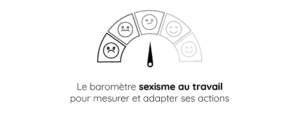
Results of the barometer of sexism at work 2021 Edition - AFMD


🌟 Sexism at Work: Results of the 2021 Barometer

The Barometer of Sexism at Work 2021 offers a detailed analysis of the manifestations of sexism in the workplace, highlighting its impacts on individuals and organizations. This report, produced with the support of several partners, aims to identify persistent obstacles to professional equality and to propose concrete ways of overcoming them.

📋 Various manifestations of sexism at work

The figures reveal the pervasiveness of sexist behavior in the workplace:

  • 78% of working women say they have experienced sexism.
  • The most common forms include :
    • inappropriate remarks or jokes about appearance or dress.
    • Systematic questioning of skills.
    • Stereotypes about women's abilities and aspirations, such as their professional commitment post-maternity.

The barometer also shows that men can be victims of sexist behavior, albeit to a lesser extent and generally linked to stereotypes of masculinity.

⚖️ Impact on victims and organizations

The consequences of ordinary sexism are many and far-reaching:

  • Stunted careers: Many victims report that these attitudes have hindered their career progression.
  • Degraded work climate: sexism generates a toxic environment, affecting team cohesion and motivation.
  • Mental health affected: Victims report increased stress, burnout and even depression.

These dynamics not only affect individuals, but also companies' overall performance, hampering their ability to attract and retain talent.

🛠️ Recommendations for action

  1. Training and awareness-raising: Initiate mandatory training courses on sexism, its manifestations and impacts.
  2. Setting up reporting systems: Offer safe, anonymous channels to encourage employees to come forward.
  3. Review HR practices: Examine recruitment, assessment and promotion processes to eliminate gender bias.
  4. Top-level commitment: Involve management in implementing and monitoring anti-sexism policies.


AFMD | The #StOpE barometer

Go to data sheet

Results of the barometer on ordinary sexism at work 2023 Edition - AFMD


🌟 Ordinary Sexism at Work: Results of the 2023 Barometer

The Barometer on Ordinary Sexism at Work, published in 2023, offers an in-depth analysis of the prevalence and impact of sexist behavior in the workplace. Carried out in collaboration with a number of players in the fight for equality, this survey highlights the extent of sexist attitudes, their consequences on careers, and the solutions to be implemented.

📋 Alarming fact: ordinary sexism persists

Figures reveal a worrying prevalence of sexism in the workplace. Key points include:

  • 87% of working women say they have experienced sexist behavior.
  • Remarks about physical appearance and gender stereotypes are among the most frequent behaviors.
  • Sexism affects not only professional relationships, but also the career development and mental health of those affected.

Certain professions and sectors, especially those with a high proportion of men or rigid hierarchies, are particularly at risk.

⚖️ Consequences for careers and well-being

Sexism in the workplace has significant repercussions:

  • Underestimation of skills: Many women report a systematic questioning of their abilities, especially in positions of responsibility.
  • Denied promotions: 1 in 3 women feel that their career prospects have been limited by gender stereotypes.
  • Impacts on mental health: Victims report high levels of stress, psychological fatigue and loss of self-confidence.

🛠️ Paths to an inclusive environment

To reduce these behaviours and their impact, companies can adopt a number of measures:

  1. Set up training programs: Raise team awareness of how to identify and combat ordinary sexism.
  2. Create safe, anonymous reporting channels: Encourage victims to come forward without fear of reprisal.
  3. Promote inclusion in HR processes: Evaluate recruitment and promotion practices to limit bias.
  4. Adopt charters against sexism: These official commitments reinforce collective responsibility.


AFMD | The #StOpE barometer

Go to data sheet

Discrimination in the Personal Services Sector - Human Rights Defender


🌟 Discrimination in the Human Services Sector: Realities and Recommendations

The 15ᵉ Barometer on the perception of discrimination in employment, conducted by the Défenseur des Droits in partnership with the ILO, highlights discrimination specific to the personal services sector. This report offers an overview of hostile attitudes, discriminatory practices and their consequences for workers in this field, where women are in the vast majority.

📋 Background and findings

The personal services sector is characterized by an over-representation of women (93%), and often precarious employment. Nearly 23% of female employees claim to have been victims of discrimination or discriminatory harassment in their careers, a figure comparable to that for the working population as a whole. However, the criteria most often cited in this sector differ and include physical appearance (32%), gender (24%), and family situation (21%).

What's more, 30% of women working in this sector claim to have witnessed discrimination in their jobs, highlighting structural problems.

⚖️ Specific forms of discrimination

  1. Physical appearance and gender
    • Physical appearance, often linked to sexist or grossophobic expectations, is the most frequently cited discrimination criterion.
    • Women are subjected to illegal demands during interviews (changing their appearance, postponing pregnancy plans, etc.).
  2. Economic and family insecurity
    • Female employees from precarious backgrounds or single-parent families are more at risk. Discrimination on the grounds of family situation remains frequent in this sector.
  3. Origin and religion
    • Female workers perceived as non-white are twice as likely to report discrimination. Religion is also a significant factor.

🛠️ Consequences for career and personal development

Discrimination has serious and lasting effects:

  • Professional life: Two-thirds of victims report repercussions on their careers, such as redundancies, non-renewal of contracts or forced professional reorientation.
  • Mental health: Nearly 70% of victims report a deterioration in their mental health, ranging from depression to isolation.
  • Self-censorship: 24% of female employees admit to having foregone career opportunities in anticipation of discrimination.

🚀 Recommendations for employers and public authorities

  1. Strengthening protection in the sector
    Collective agreements and preventive measures need to be strengthened, notably by including specific anti-discrimination clauses.
  2. Raising awareness and training
    Employers and recruiters need to be trained to avoid discriminatory practices, particularly during job interviews.
  3. Encourage reporting
    Set up anonymous reporting channels and inform employees of their rights.
  4. Enhancing the status of female professions
    Increased statutory and financial recognition for personal services professions is essential to limit job insecurity and inequality.

Human Rights Defender

Go to data sheet

Perception of discrimination in employment - Défenseur des Droits


🌟 Discrimination in Employment: Perception and Realities

The 13ᵉ Barometer on the perception of discrimination in employment, carried out by the Défenseur des Droits in collaboration with the ILO, explores hostile and discriminatory attitudes in the professional world. This report, based on a representative sample of the working population, highlights the systemic and intersectional dimensions of discrimination, as well as its consequences on victims' life paths.

📋 Key findings

Almost 23% of working people in France claim to have been victims of discrimination or discriminatory harassment at work. The most frequent criteria include physical appearance (40%), gender (40%), and state of health (30%). The study also reveals an increase in reports of hostile behavior, including stigmatizing attitudes and situations of devaluation.

The intersectional dimension of discrimination is particularly marked. Women perceived as non-white, people with disabilities or chronic illnesses, and members of the LGBT+ community appear to be the groups most at risk.


⚖️ A continuum of hostile attitudes

Discrimination never occurs in isolation. Hostile attitudes are part of a continuum ranging from prejudice and stereotypes to stigmatizing behavior, harassment and professional devaluation. Almost 24% of victims report having been subjected to multiple behaviors, exacerbating the deleterious effects on their well-being and careers.

🛠️ Consequences and levers for action

  1. Impact on career paths
    Nearly half of all victims (46%) say that discrimination has had a direct impact on their employment: dismissal, downgrading or forced transfer. These experiences often generate self-censorship, limiting victims' career opportunities.
  2. Mental health and isolation
    Discrimination causes a significant deterioration in mental health and social relations. 49% of victims report feeling tired or depressed, and 35% feel isolated.
  3. Increased recourse
    Recourse to help is on the increase, but remains limited. Only a minority of victims contact trade unions, lawyers or the labor inspectorate. Fear of reprisals or the conviction that "nothing will change" still too often hinders the process.

🌍 Recommendations for employers and public authorities

  • Training and awareness-raising: Reinforce training for HR teams and managers to prevent prejudice and stereotypes.
  • Establish anonymous reporting mechanisms: Encourage employees to report discrimination in complete safety.
  • Objectivize HR processes: Generalize the use of standardized assessment tools to limit bias, particularly in recruitment.
  • Sanction discriminatory behavior: Apply firm sanctions to signal zero tolerance of discrimination.

Go to data sheet