Documentary database

The diversity label: a lever for preventing and combating discrimination - AFMD

27-12-2024


🌟 The Diversity Label: a tool to combat discrimination and promote inclusion

Le Label Diversité, un levier pour la prévention et la lutte contre les discriminations, published by the AFMD in partnership with the FACE Foundation, offers a comprehensive methodological guide for companies wishing to embark on a labeling process. This label, launched in 2008 by the French government, embodies a formal commitment to combating discrimination and promoting inclusion, through exemplary human resources management practices.

📋 The Diversity Label: Definition and Challenges

The Label Diversité recognizes companies and organizations that are actively committed to preventing discrimination and promoting equal opportunity. The label covers the 18 discrimination criteria recognized by law, such as origin, gender, disability, age and union membership. It is part of a continuous improvement approach to our practices.

Why get involved?

  • Enhanced corporate image: A strong signal sent to stakeholders (customers, employees, partners).
  • Strengthening internal cohesion: collective mobilization around the values of fairness and respect.
  • Reduced legal risks: In compliance with anti-discrimination legislation.
  • Increased attractiveness: Particularly to talent from diverse backgrounds.

⚖️ Labelling stages

  1. Preparation :
    • Appointment of a diversity coordinator.
    • Creation of a steering committee.
    • Definition of a labelling perimeter.
  2. Diagnosis :
    • Inventory of HR practices and internal processes.
    • Identifying risks of discrimination.
  3. Diversity policy implementation :
    • Formalization of an action plan.
    • Team training.
    • Setting up listening and alert mechanisms.
  4. External assessment by AFNOR :
    • Practice audit.
    • Opinion of the multiparty labeling commission.
  5. Follow-up and renewal :
    • Interim evaluation at 18 months.
    • Renewal after 3 years.

🛠️ Recommendations for a Successful Approach

  • Involving management: The support of the company's governing body is essential to the success of the project.
  • Raising awareness among all employees: Through training on non-discrimination and workshops on stereotypes.
  • Adopt a participatory approach: Include social partners and employees in the process.
  • Communicate effectively: Promote the diversity policy in internal tools and external campaigns.
  • Rely on experts: Collaborate with specialized organizations to ensure the relevance of our actions.

AFMD | The Diversity Label, a lever for preventing and combating discrimination. Obtaining and maintaining your label".

Document presentation

Latest documents

La Boussole - SOS Homophobie
30-12-2024


🌈 La Boussole: Comprendre et Réagir Face aux LGBTIphobies

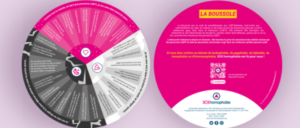
La Boussole, created by SOS Homophobie, is an awareness-raising tool designed to combat LGBTIphobia, i.e. manifestations of rejection, contempt or hatred towards lesbian, gay, bisexual, transgender and intersex (LGBTI) people. This guide presents situations experienced by LGBTI people, whether benevolent or discriminatory, to raise awareness and encourage action against violence.

📋 The different situations explored

  1. When you feel good
    • Talk freely about your relationships, if you wish.
    • Assert your gender identity and be correctly named.
    • Live out your relationships in the open and enjoy the same rights as everyone else.
  2. When you feel uncomfortable
    • Being mocked or isolated.
    • Hearing jokes or clichés about LGBTI people.
    • Facing hostile judgments or the minimization of experienced discrimination.
  3. When you're in danger
    • Physical or sexual abuse.
    • Be the target of harassment, rumors or outing (forced disclosure of sexual orientation or gender identity).
    • Being rejected from your home or having your rights violated.

🌟 Compass objectives

  • Raising public awareness: Informing the public about the realities experienced by LGBTI people to foster understanding and empathy.
  • Helping victims: Provide concrete examples of situations and resources for dealing with violence.
  • Encourage witnesses: Encourage allies to take action against discrimination and support those affected.

🛠️ Resources and support

  • SOS Homophobie: A helpline and chat room are available to support victims and witnesses.
  • Emergency numbers: In case of immediate danger, call 17.

La Boussole | SOS homophobie

+ Go to data sheet

LGBTIphobia Report 2023 - SOS Homophobie

30-12-2024


🌈 Report on LGBTIphobia in France: 2023

SOS Homophobie's 2023 LGBTIphobia Report reveals a worrying reality regarding the discrimination and violence suffered by LGBTI people in France. This document is based on over 1,500 testimonials collected via the association's hotline, chat'écoute and other platforms. It analyzes the contexts and manifestations of LGBTIphobia, and suggests ways of improving inclusion.

📋 Report key data

  • 1,506 testimonials recorded, up 5% on 2022.
  • Background to the violence :
    • Online hate (17% of cases).
    • Public places (12%).
    • Family and close friends (15%).
    • Work (10%).
  • Main targets :
    • 64% of victims are cisgender men.
    • Trans people account for 18% of cases, marking a significant increase.

🌟 Events and developments

1️⃣ Verbal and physical abuse

  • Insults: Present in 40% of cases.
  • Physical assaults: 15% of testimonies report beatings, injuries or stalking.
  • Harassment: Mostly in the neighborhood, at work or in the family.

2️⃣ Increase in cases of transphobia

  • An increase of 27% compared to 2021, linked to the trivialization of transphobic discourse in the media and online.

3️⃣ Rejection and ignorance

  • Rejection behavior affects 68% of victims, amplifying their isolation and malaise.

🛠️ Recommendations for action

  1. Raising awareness from an early age
    • Develop educational modules on inclusion in schools and universities.
    • Train teachers to better welcome and support LGBTI students.
  2. Protecting victims
    • Strengthen online and face-to-face reporting systems.
    • Ensure that law enforcement and the justice system take appropriate action.
  3. Promoting inclusion in the workplace
    • Training managers on LGBTIphobia.
    • Set up corporate support networks.
  4. Penalizing hateful behavior
    • Strict enforcement of anti-discrimination and anti-hate speech legislation.

Report on LGBTIphobia | SOS homophobie


+ Go to data sheet

Sexual orientation in the workplace: understand and act - IMS-Entreprendre pour la Cité

30-12-2024


🌈 Orientation Sexuelle en Entreprise : Comprendre et Agir

The guide Sexual Orientation in the Workplace: Understanding and Acting, published by IMS-Entreprendre pour la Cité, aims to provide companies with practical tools for including sexual orientation in their diversity policies. This document demonstrates that dealing with sexual orientation in the workplace contributes to employee well-being, loyalty and improved organizational performance.

📋 Why take sexual orientation into account?

  1. An often overlooked criterion
    Although sexual orientation is one of the 18 legal criteria for discrimination, it remains poorly integrated into companies' inclusion policies.
  2. A well-being issue
    LGBT+ employees who conceal their sexual orientation at work suffer considerable stress, which impacts on their productivity. An inclusive policy helps them to flourish.
  3. Impact on performance
    Companies that take diversity, including sexual orientation, into account attract and retain talent, while improving their image with customers and partners.

🛠️ Actions for effective inclusion

  1. Explicit company commitment
    • Explicitly mention sexual orientation in diversity charters and internal documents.
    • Sign anti-homophobia charters, like that of l'Autre Cercle.
  2. Awareness-raising and training
    • Training HR teams and managers in diversity management.
    • Organize workshops and events, such as the celebration of the International Day Against Homophobia and Transphobia.
  3. Setting up inclusive systems
    • Revise administrative documents to avoid discrimination (e.g., include the terms "partner" or "parent 1 and parent 2").
    • Create listening and reporting units to support employees who are victims of discrimination.
  4. Support for internal networks
    • Recognize and support in-house LGBT+ employee associations to improve cohesion and experience sharing.
  5. Working with external partners
    • Collaborate with specialized associations to enrich inclusion policies (SOS Homophobie, Homoboulot, etc.).

💡 Examples of committed companies

  • IBM: Executive training with an LGBT+ reverse mentoring program.
  • France Télécom - Orange: Support for the Mobilisnoo association, which helps LGBT+ employees.
  • Sodexo: Implementation of international inclusion charters and creation of an LGBT+ taskforce.

Guide "Sexual orientation in the workplace" | DILCRAH

+ Go to data sheet